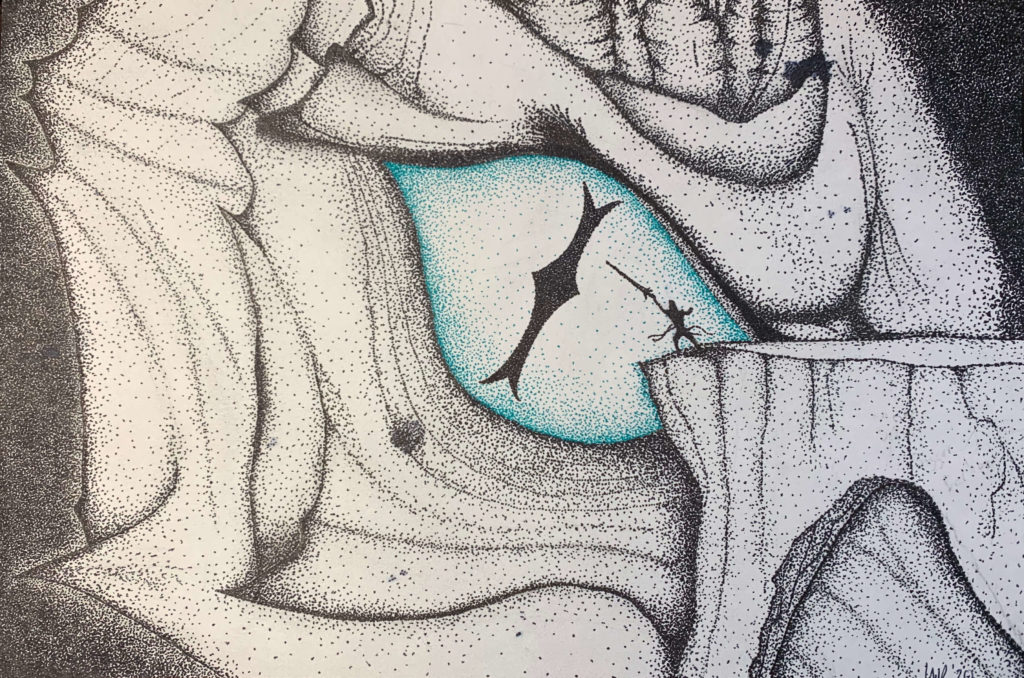
(based on The House on Mango Street, by Sandra Cisneros)
By Nahum Workalemahu IV
There are more stars in the galaxy than there are people in the world. I saw that on TV.
I look up at the stars shining like the teeth of those women you see in magazines, smiling for the whole world to see. I wanted to be like them. They hold expensive purses. They wear makeup that shines like the headlights, lighting the way. They strut across a path where boys and girls can admire them.
Rachel and Lucy agree. They want to be rich and live in a big house one day. “If I grow rich one day, I’ll buy the biggest house and a pool too,” says Lucy. “If I was rich, I’d boss everyone around and nobody would tell me to stop riding the bike,” says Rachel. They dream, and dream and dream.
But I don’t want to imagine, I want to be seen. I want to be admired like those girls, who have Marin’s courage but achieve their own goals. Who have Lois’s beauty but walk past the dark alleyways. Who take their life into their own hands.
I look up at the house on Mango Street one more time, the one I could never accept as my own. I start walking under the burnt sky. The street was quiet, like I was the only one awake in a sleeping neighborhood. The trees bent and swayed under the late-afternoon sky in a sad dance, obeying the wind. I feel bad for those trees that never had the chance to see past Mango Street. The trees that never had the courage to let go of their roots and explore the world. The ones that could never be free. The trees rustle in the wind, begging me to come back one day and tell them what the world is like.
When I reach the end of the street I look back for one final time. A star stared down at me, smiling just like my mother does. The woman who taught me everything she knew, hugged me when I came home crying, gave me everything she had to offer. The words from the cat-eyed woman flash in my brain, and I promise to remember them. But I won’t wait for the stars like Marin, those stars that vanish in the blink of an eye.
When I reach my destination, I do what my mother never could. I buy a ticket and find a seat.
(based on The House on Mango Street, by Sandra Cisneros)
By William Grossman IV
I always have to sit in the backseat of our car. The car that seems to be on the verge of dying every time we roll out of the driveway. The car that suffocates me and my poor legs. I want to sit in the front, but Carlos says that whoever gets to the car first gets to sit in the front, but that’s not fair because I’m the slowest. Whenever we ride together, Carlos and Kiki take the middle seats and Nenny and I have to sit in the back. The back is the worst. All the seats in the back have tiny holes in them. Mama says that they’re from the adventures that the old owner had. When it’s my turn to have adventures, I want to have them in the front seat. But for now, I put up with the tiny backseat and the holes and the stupid races.
When I’m in the car, I like to hang my head back and look out the back window upside down. I watch the birds sitting on the telephone lines. The birds balancing on the thin line like a tightrope. It’s beautiful how birds can glide so gracefully in the air. In some ways, I wish I was a bird. The tiny birds with the round red bellies that sit on the telephone lines don’t have to listen to anyone. When they want to leave they just start flying. They can see any place in the city, and never have to get smushed into our tiny Honda. Birds are free. When I’m older, I want to be like the birds. I want to travel all over and see the Empire State Building and the Golden Gate Bridge, and all the other buildings that make people stop and stare. But, the best thing about birds is that wherever they go, they always end up back home in the end.
A few months ago, a truck came and took the car away. Papa told me that it was because it was too old and we were going to get a new one. I was excited then, but it still hasn’t come. I know now that, without the car, I’m even less free than the round-belly birds, because I have to take the train everywhere. But I know that my chance for adventure is coming and then I’ll soar off to see all the birds.
It seemed a typical Sunday, around six in the morning. I was walking from Boston College on a dimly lit street back to my house. Annie, my golden retriever puppy, her warm brown eyes scanning the surroundings, bounded around happily, exploring favorite territory in dew covered grass, sniffing the fresh morning air and chasing rabbits. My puppy selflessly wagged her tail, exhibiting only happiness and joy, with the sole purpose of pleasing me. Yet, something was wrong. There were too many signs of life during such an unearthly hour.
There were not the usual birds and squirrels, but people on a Sunday at 6 A.M. leaving in their cars! More and more adults started leaving their homes in the short duration of fifteen minutes that it took for me to walk up the street. The reality of the situation dawned on me; I realized that even on Sundays when society halts, doctors were still working grueling hours due to the coronavirus pandemic. I saw cardiologists, intensivists, and nurses sleepily walking to their cars. But this seemingly unusual sighting was not fear-inducing like many other present day events. Instead, these doctors were purposeful and inspiring, displaying grit and determination on their stoic faces and illuminating hope in the darkness of the pandemic. Though each individual face was shadowed in darkness, I could note the presence of a unified resolve. Their shadows, augmented by the early morning sun, made these doctors seem bigger than they are (showing how they are part of a world effort), like soldiers leaving for war. The coronavirus pandemic is a world war, but you cannot see your enemy. And these doctors, following duty and their calling to heal, lead the path into a battle between life and death.
And as I finally reached my house, I saw my father’s silver car pulling out, purposeful and into the sunrise. As I saw that, a new window opened for me and I realized what every other family whose relatives had to risk their lives to help in this pandemic were feeling. Emptiness engulfed me as I saw my father leave to battle between the lives and deaths of others, but I knew that my dad and many others would give hope and happiness to the thousands suffering from the coronavirus pandemic.
(based on The House on Mango Street, by Sandra Cisneros)
By James McCurley IV
Whenever we walked to the intersection of Raymond and Mango Street, Tariel Pritchard was sitting on her old lawn chair, watching the traffic go by. She didn’t seem to do much other than that. Just sat from dawn till dusk. Even when it rained, I’d see her, with a poncho pulled over her head, shivering in the cold as she watched the road.
One day, when she looked like she was sleeping, Rachel bet a quarter that I couldn’t touch her without waking her up. A free quarter was too good to miss. I crept up the lawn, quiet as a shadow, reaching out one shaky hand to touch her. For a second, I hesitated, looking down at her. I noticed her disheveled clothing, her hair that looked like it hadn’t been washed in a month. I noticed her wrinkled skin, as though she’d dried out like a raisin from all this time sitting in the sun. Her left hand was bunched up around a photograph, but I couldn’t see of what. Then, as I reached forward, my hand trembling, like a tree branch in the wind, she looked up and stared at me.
Ms. Tariel took it in for a second, me caught in the act, my hand outstretched, my friends behind me, frozen like children caught with their hands in the cookie jar. And then she laughed. It was a nice laugh, loud and clear and pretty, like the sound of Gil’s music box. And she smiled, wide and toothy. She didn’t look quite as old when she smiled. She kept on laughing and smiling, and I felt myself relaxing, her warm mirth melting my icy fear.
Can I help you, she said, with evident amusement. I’m just waiting out here for my son, and she holds up the wrinkled photograph, a young man with dark hair and green eyes, and with a smile just as nice as his mother’s. He promised to come visit me, she murmured, turning away from us and looking back at the street.
We went back to our playing after that. But I always snuck glances at her. I wondered when her son would come, when his car would pull into her driveway, when he would finally fulfill his promise. But I never saw him. Every day, Ms. Tariel came out and sat on the lawn, eagerly, expectantly, in her unwashed clothes and unkempt hair. And every day she walked back inside, with a frown and a murmur that maybe he’d come tomorrow and something had obviously come up that day, and he couldn’t make it.
One day, she wasn’t on the lawn. Mr. Benny says she had a bad heart and died from it in the night, but I didn’t believe that. I knew it was the waiting that killed her. Waiting until she wilted, like Edna’s flower boxes that wither away in the hot sun.
(based on The Catcher in the Rye, by J. D. Salinger)
By Eli Bailit III
A couple years back I was at camp. It was this phony theatre camp my parents had sent me to so I could “further my natural talent” or some rubbish like that. I don’t really like theatre at all, if you want to know the truth. I mean, it’s not as bad as the movies, but it’s still phony as hell. One time when we were little, Allie and I went to see a dinky community theatre show of “Snow White and the Seven Dwarves.” Now I can barely stand dramas for one thing, but those fairytales, boy, they kill me. They really do. Allie and I almost fell out of our seats, how corny it was. I mean, the dwarves were taller than goddamn Snow White herself!
Anyway, the camp was full of phonies – I swear to god, you’ve never seen so many. It was like the goddamn phony olympics. The folks at this camp were fairytale kind of phonies. And there was this one girl, Louise, who was the worst of them all. She would have won every goddamn gold medal at the Phony Olympics, no kidding. Old Louise was one of those girls who acted funny around guys. This was a couple years back, and I didn’t have much taste for girls yet, if you want to know the truth. I think I was just a late bloomer. Of course Old Louise picked me as her target. There are some girls, especially the younger ones, who are jerks to boys when they like them. This Louise must’ve really liked me, since she was the biggest phony jerk you’d ever seen. Half the time she’d be all, “Oh, Holden, your acting was superb today,” and then the rest of the time she would be an absolute menace. Man, that phony two-faced act killed me. She would pull my hair, step on my foot, anything to really piss me off. I would have let one go at her, too, if she wasn’t a girl and all, trust me.
Javi Werner II
One day, old Louise started this new act – she would call my name over and over and over until I turned around and paid attention to her. I had really had enough, though, and so one time I just didn’t turn around. She kept calling my name with that same whiny voice: “Holden, Hoooooolden!” You won’t believe what she did next. She took a hula hoop and chucked the thing right at the back of my neck. I told you she’d win the Phony Olympics, since that throw would have made her the discus champion. It hit me spot on and I was red for days. Anyway, I was mad. I went up to the camp director, Mr. Snobmeiser or something phony like that, and told him what was going on. I’m not a snitch, I’m really not, it just had to be done. Old Louise had the brilliant idea to run into the bathroom and hide. Snobmeiser went in after her and they came out five minutes later.
I had a feeling something was wrong since old Snobmeiser was looking right at me and Louise had tears in her eyes but a goddamn smirk on her face. Snobmeiser told me I had really upset old Louise and I ought to apologize to her. Me, apologize to her?! That’s one thing I just can’t stand about girls. They look so goddamn pristine and innocent that people assume they did nothing wrong. And these adults, they take one look at you and think you’re the bad egg. Louise had used her little girl cry card and now I looked like the jerk. That’s when I knew I had to get the hell out of that crumby place.
The room was a dull gray, with only a door and a cold sheet of mirrored glass on the walls. Sal Luttazzi sat hunched over in a folding chair, tapping his fingers against the metal table. Without a clock in the room, it was impossible to tell how long he waited, but he guessed it was at least half an hour. At last, the door opened, and a police sergeant walked in. He took a seat across from Sal without saying a word and began reading a stack of files in front of him. The sergeant made a point of reading all the files with great care. He would take a paper off the top of the stack and read through it, all the while shaking his head, or adjusting his glasses, or raising his eyebrows in an exaggerated manner.
At last, he looked up. “Alright Sal, I’m sure it’s obvious why you’re here. There are, however, some – details – which we need to work over. And it’s gonna be easier for you – for me – if you cooperate here.” The sergeant waited, expecting a reply. Receiving none, he rolled up his sleeves, and then he continued. “Let’s start with the easy questions. When did you first meet Mr. Garcia?”
* * *
Sal looked over his shoulders, then looked across the motel parking lot. Florida was surreal at night, especially hours after midnight. Cicadas buzzed in the grass, and lizards would run across the concrete from time to time. The streets across the way were empty, except for a few stragglers leaving the now-closed bars. He breathed in the heavy air, and reclined into the cheap plastic chair he was sitting in, and watched as a small pickup truck drove into the lot. Rising to meet it, his hand strayed towards his belt cautiously, a nervous habit. The truck came to an abrupt halt next to him, and a young man rolled down his window while turning off the radio. “So you’re the guy they sent?” the driver asked, peering out of the open window uneasily. “Come on, get in. The name’s Tony. Hey, hurry up. We have a delivery to make.”
* * *
The sergeant scribbled on a legal pad, taking furious notes. “Did you ever check the trunk? Were you aware of what you were delivering?” He stopped writing, and looked at Sal with a glint in his eyes. Sal’s face was blank, and he replied, “No. I never looked in the trunk.” The sergeant froze. “Don’t play me, Sal. Just answer the damn question.” Sal picked up a pen from the desk, looking it over. It was one of those cheap pens that come in packs of twenty. Under the table, he bent it one way and another, trying to break it. No matter which way he went, he was unable to snap it. “That’s the truth, officer. You don’t check the merchandise, especially in the open. Bad for business. I had a guess about what we were moving, but…” He shrugged, and went back to looking at the pen.
The sergeant slid a folder across the table, and tapped it twice. “Open it.” Sal flipped the folder open, revealing a few photographs of large duffel bags with their contents opened up. He whistled slowly, and wondered how much it was worth. Probably around 50 kilos, so likely more than half a million, he thought. He rubbed the back of his neck and let out a long, deep sigh.
The sergeant continued. “Yeah, it’s a lot. Thanks to you, I’m getting a promotion. Funny how life works, huh?”
He was interrupted by a knock on the door, and a secretary brought in two mugs of coffee, along with a thick stack of documents. The sergeant put down the two mugs of coffee, and then handed the stack over to Sal, and explained the situation. The sergeant said that they needed Sal to flip on Tony – to sign the documents which would incriminate him and greatly ease the job of the prosecution. The sergeant said that Tony would probably have done the same to Sal. The sergeant said that they would enjoy the coffees together – a strange and somber sort of toast – once the papers were signed.
Sal hesitated. The sergeant raised an eyebrow, but said nothing.
“Look, I’ll show up to testify in court, but – I can’t sign this. You don’t rat out your associates, not like this. Officer, don’t make me sign this.” The sergeant stood up, his face becoming red, and his nostrils flaring out. “That is not your call to make, Luttazzi. Do not protect that criminal.”
* * *
The air was still cool, and dawn was breaking over the wide expanse of highway. Tony was quiet, but not unfriendly, preferring to blast the radio as they drove. They had been traveling for hours and were somewhere in Georgia when Tony decided to switch off the radio. “Hey man, let’s stop for some breakfast, yeah? You want something?” Sal nodded, and they pulled into a small diner.
Tony reached to turn the car off, but Sal stopped him. “Better to keep it running,” he advised. They headed in and sat down at the counter. A waiter came over and motioned for them to order. With glazed eyes and disheveled hair, it was clear the kid was not too happy to be working. Tony asked for scrambled eggs and rye toast. Sal took a second to look over the menu. “See, I’m thinking I want the Western omelette, but no ham, I want sausage instead. And a side of hash browns. Can you do that for me, Mr. – ” He squinted at the kid’s name tag. “Mr. Ralph?”
“So you want a custom omlette? That’s 2 bucks extra.” The waiter began collecting the menus.
“No, I want a Western. With sausage.”
“2 bucks extra.”
Sal threw his arms up in despair. “What the hell! Look, man, I’m short on cash, alright? I’ve got what – six dollars, two quarters, and a nickel – on me. Let a man eat!”
Tony jumped into the conversation, chuckling, but trying very hard not to let Sal see. He looked at the waiter. “I think my friend over here will be just fine without all that food. He’s not as slim as he used to be, ya know? Say, Sal, how about you lose the hash browns?”
Sal turned in his seat, nostrils flaring. Tony immediately backed up, sliding down the bench away from Sal, snorting with laughter. “What, you’re a joker now?” Sal demanded. “This is funny? Fine, I give up. Whatever, no hash browns.”
Tony burst out laughing, doubled over while the waiter looked on and Sal fumed. Then, he took out his wallet, and pulled out a few crumpled bills. “Here, for the hash browns. And two coffees, while you’re at it.”
* * *
It had been a nice meal, all in all, Sal thought. Once he had calmed down and they started eating, they began to talk at length – where they were from, what they were going to buy once they finished the job, Sal’s back pain, Tony’s family back in Cuba. It had been a nice meal.
Sal reached across the table and grabbed the stack of documents. He took the cheap pen he had been fiddling with and went through the stack of papers, signing them, one by one. Each time he signed a paper, his hand would start shaking. By the time he made it to the last document, the shaking was so bad that he could not write his name. He picked up his hand and slammed it into the table several times. The shaking stopped, and he signed the last file.
* * *
Tony was slumped over in the passenger’s seat while Sal drove. It had been about a day and a half since they started their journey back in Florida, and they were on the final leg of the trip. A light mist blanketed the road, and tiny raindrops pattered on the thin roof of the truck. Sal yawned and settled back into the warm leather upholstery of the seat, his mind wandering elsewhere. As the truck rounded a bend, Sal spotted two parked cars blocking the road. Their sirens blared, lights cutting through the mist in red and blue splotches. Sal nudged Tony, jabbing him in the guts. Tony woke with a start, then fell silent. Numerous officers took position around the truck, weapons drawn, and one with a bullhorn shouted at them to exit the vehicle. Both men surrendered and walked with hands above their heads towards the front of the car. Sal choked back a lump forming in his throat and looked over at Tony, who refused to meet his gaze. The rain began to pound their heads, and drops ran down their noses onto the concrete below. Two officers approached, and one put cuffs around Tony. The other, a sergeant, looked up at Sal.
“Good work, officer. Welcome back.”
* * *
“I tell you, Sal, that felt more like an interrogation than a debrief, wouldn’t you say?” quipped the sergeant. “Look, no hard feelings, right? C’mon, how ‘bout you go home. Get some rest, I’m sure you’re tired.” Sal refused to meet his gaze. “Alright, I’ll leave you alone. But just so you know, the department appreciates what you did. You did a good thing, Sal.” The sergeant walked out, and mumbled “a good thing” to himself as he shut the door. Sal grabbed a mug of coffee, and drank it all at once. It was watery, and much too bitter.
As you ignore the scabs of snow on your ankles and stuff your sweaty snow pants back into your boots, you recall your past experiences at your neighborhood park. Baseball practice reminds you of the hot stench of sunscreen and the itch of brown grass as you stood in right field. You were always assigned right field. As for your park’s soccer clinic, which Dad goofily assured you would “build character,” you can only remember the hot tears draining from you out of shame at your klutziness. Sledding, fortunately, requires much less athleticism than soccer or baseball, which is why you’re okay with revisiting the park for your tenth birthday celebration.
Nikey Cruz I
Droplets of muddy water ooze from your laces as you tighten them. Standing, you grab your gloves from the bench, which soak your already pruney fingers. You cannot feel your cheeks, your nose might as well be an icicle, and you dream of licking undissolved hot cocoa mix from a steamy mug, but it doesn’t matter. You could keep sledding forever.
You wave your orange saucer sled at Dad. He gives a thumbs-up: one more time. It’s your tenth birthday, and he will indulge you.
Making sure that your boots sink into the snow with a heavy crunch, you approach your friends. Stephen blows into his gloves. Michael shakes the snow off his coat. Theo’s wet hair is plastered to his forehead as if he started moussing it and gave up.
Bright blurs of jackets and sleds whiz down the slope like jelly beans rolling down the roof of a gingerbread house. The meandering, endless, icy descent fills your bones, for just a moment, with dread.
It’s the same dread you felt when your neighbor Harold, who seems really old because he’s thirteen, tried to teach you how to skateboard. He twirled around on that thing like a dancer. You, however, gave up after your fifth round of bloody knees.
The difference here, you tell yourself, is that sledding is easy peasy. Gripping your orange saucer sled, you leave your friends and plod to the edge of the hill. Particles of snow buzz in your vision like static on a TV screen. Dropping the sled on the ground and plopping down on your bum just a bit too hard, you push off. The sled veers off to a much steeper part of the hill. You fly toward a mound of carefully packed snow that looks like a skateboard ramp. The sunscreen stench, the grassy itch, and the hot tears of yesteryear come flooding back.
When you hurtle into the air, you can hear yourself swallow your spit. You do not think about your tenth birthday, or how you will drink hot cocoa when you get home, or anything like that. You hear yourself swallow your spit, and then you are flailing on the ground, your tailbone exploding with pain. Dad shouts and runs down the hill, but it is too late. Thin blond reeds, vestiges of dazed summers at the neighborhood park, hover over your body like a farewell.
It’s strange to be able to divine, to see through time, because the threads of time get all tangled, the ones that were and are and will be and could be and could have been. It’s strange, because every stranger I pass has their life story spilled out. Because with a glance I can tell everything that has happened to them, tear their deepest darkest secret from their soul with a look, and see what could be, a million possible versions of the future that could all happen. I remember every face and future I see. Vividest of all I remember looking up one day at the grocery store, just at checkout, and seeing the cashier, a tall, smiling young man, a freshman at college, and I saw, like double vision a thousand times over, visions of his future, images of futures as a salesman, or a doctor, or a plumber, or the president.
And I saw a shadow among those futures, the shadow of death. That day, in a car crash right after leaving work, as he rams into another car on the highway. I wanted to speak out, to shout, to tell him what I saw, to be careful, or drive slower, or avoid the highway all together. But I was silent. I can speak if I wish, but I know that I can’t change anything. If I speak, then the threads get all muddy, and I don’t know if he’ll believe me. People very rarely do. You’d think that I was mad, too, if I claimed to see the future. All I can do is keep silent and pray. I’m like Cassandra, cursed to see and see and try to tell and never to be believed, until eventually I see everything I know, everything I love wither away, or withering, or about to wither, and I can’t stop it. And I just give up and shut my mouth.
Other Wizards like to say I’m lucky, that I’m gifted to be the greatest Diviner in the world. They don’t understand. How could they? They have to try to see, with tea bags and crystal balls and palm readings and elaborate ceremonies. They don’t just walk around, and see the death of everyone they pass a thousand times over, until they just want to curl in a ball and cry because there is nothing they can do, and hide themselves away in a dusty apartment because they can’t bear to see anyone suffer anymore. They just read in the newspaper about a tragic car accident taking the life of a young man driving home from his job at the grocery store.
I guess I don’t really know how it started. I noticed it one day when I was getting dressed. My pants didn’t fit me anymore. I just figured I was losing weight because of all the stress at work. Losing weight isn’t the worst thing ever, but I didn’t feel thinner or even healthier. My diet hadn’t really changed. I was eating the occasional salad, but I wasn’t being particularly mindful of what I did and didn’t eat. The average 31-year-old wants to lose weight, so I just brushed it off. For as long as I could remember, my weight had always fluctuated, but I was down to 160 pounds. I hadn’t weighed 160 since freshman year of high school. I really hadn’t grown much since then, so it wasn’t that visibly noticeable. I felt as healthy and spry as ever. Then I noticed that I kept having to tie my shoes tighter and tighter just to keep them on. It wasn’t just my waistline. My feet were getting smaller too. I didn’t really have many friends when this whole ordeal started, and I most certainly didn’t have a girlfriend, so there was nobody there to see the progression from day to day. My chair at work started feeling a little bit bigger, as if somebody were adding a quarter inch to the bottom every day. The weather started to turn, and I busted my winter coat out of the closet. Much to my chagrin, but unfortunately not much to my surprise, it was about a size too big. I’d always been on the smaller side, so clothes being too big for me wasn’t uncommon. Suddenly my car seemed bigger, my coworkers taller, and my bed vast and empty.
I decided to call my brother to see what he thought. He said that I seemed stressed out and that it was probably nothing, but I nevertheless demanded he come see for himself. I opened the door and his face dropped immediately. My little brother dwarfed me. He threw me in the car and we sped off to Dr. Barnhardt’s office. I sat on the cold wax paper cover of the inspecting table while he prodded my tongue with the depressor. He told me everything was normal, and until my blood work came back, they’d have no idea what was wrong with me. At first glance, the only thing different about me was that I was two inches shorter than I had been at my annual checkup six months prior. Two weeks later, my blood work came back clean. There was nothing wrong with me except for the fact that I was shrinking at an alarming rate.
That was two months ago now. I’ve shrunk four inches since then. This time last year, I was five feet six inches. I’m currently five foot nothing. I’ve seen the doctor three times in that period, and every x-ray, every CT scan, every possible test he could think of came back negative. Dr. Barnhardt called it the most astonishing thing he’d ever seen. I’ve just sort of accepted it by now. The hardest part is that I don’t know what the end result is going to be. Is the shrinking going to stop, or will I keep getting smaller until I disappear into nothing? At this rate, I could be completely gone within a few years. I’m not really scared. Being smaller has made my life easier in a lot of ways. My clothes are cheaper now. I’m never claustrophobic or cramped on the train. I can do tons of pull-ups because of how light I am. The sky looks prettier from where I am, if that makes any sense. I’m not sure it does. For whatever reason, I sleep better, I worry less, and I laugh more now that I’m down here. Pretty soon I’ll be in the four-foot range. I can’t wait.
These words resounded in my head as I donned my armor. As my hands fumbled for the straps, I could only think about what this precept meant for me that day, as we were about to set out for the closest winter quarters. I, Commius Parsus, centurion of the fifth cohort of Caesar’s tenth legion, was going to die. The orders from our general Quintus Titurius Sabinus were to leave from our camp as quickly as possible, since an attack from the Eburonian savages was imminent. I planned to march under the standard of Cotta.
Lucius Aurunculeius Cotta was a man whom I, along with the entire legion, admired. Unlike Sabinus, Cotta was a fighter. There was a reason he did not wear the gold-plated armor of a general. He saw too much action for things like that. In every battle I had ever fought, he was there beside the grunt soldiers. We all knew Sabinus’s plan was not how Cotta liked to do things, but he nevertheless supported it.
As we trudged out of camp, the sun’s rays were beginning to lash out against the sky. Alongside my aquilifer Petrosidius, I led my century into a steep ravine. As our sandals dragged through the clods of dirt, my fears were confirmed. I saw the glint of an iron javelin fly by my face and bury itself in the leg of Titus Balventius, one of my fellow centurions. The following minutes of battle were short-lived. I heard the fateful command fly from Cotta’s mouth: “Consistete in orbem!” We locked shields and joined together into a circle, one of the legion’s most feared formations. At this point, we were on the defensive and could suffer losses until reinforcements came, or until we were all dead. Our numbers, as well as our morale, slowly dwindled as Ambiorix, chief of the Eburones, and his group of warriors slowly advanced.
I raised my javelin, ready to face death and take my stand for the legion and for Caesar. But, my battle cry was cut short by the blast of a trumpet, signaling a parley. I saw Sabinus and the rest of the high command, save for Cotta, drop their weapons. Then, a nightmare unfolded before my eyes. The Gauls had slowly surrounded the high command, now unarmed, and they rushed in for the kill. With Sabinus and the rest of the high ranking centurions killed, the Gauls converged on Cotta, who was now fighting desperately, and they sent his soul to Elysium.
Without a leader, the rest of us took flight. I took my men through the woods in search of the closest camp. It was a long, dangerous journey, but at last I made it to the camp of Titus Labienus. The Fates looked down kindly upon me, and I was discharged before I had to experience anymore of Mars’ atrocities.
Miguel Angel Rincon II
Postea
I walked through the Forum, anxiously wringing my hands. Today, there would be a reading of Caesar’s memoirs at the Campus Martius. When I arrived at the rolling field, where I had been mustered years before, the memories came flooding back: the bloodstained breastplate of my aquilifer, the bloodthirsty fire in every Gaul’s eyes as they cut down my men, and the gaping pit in my stomach. The troubadour was greeted with wild applause as he began his tale. He began, announcing, “I will sing of the heroic deeds of Titus Pullo and Lucius Vorenus, two rival centurions, who in the fifth year of the Gallic War were able to reconcile their differences and save their camp from certain destruction.” As I listened to the sickly sweet story, I was filled with unbearable anger. How could Caesar speak of such victory, while I had seen so much death? There was neither victory nor virtue in the war I fought, only suffering and death. Caesar’s fanciful propaganda was nothing like it. I stumbled away from the crowd, knowing that no one else would realize Caesar’s trickery. And now, Caesar was in Rome itself, with the adoration of the people, and with the city under his thumb…what would be his next move?